Your picker gets an order for wire spools. They check the system, walk to Aisle 7, maybe Bay 2 and Shelf B, but the item isn't there. Now they're searching neighboring shelves, checking other aisles, and calling over the radio to ask if anyone moved it. Ten minutes later, they find it three aisles over… and that's if they even do.
The order is delayed, the customer is waiting, and this scenario plays out a dozen times every day. This isn't a training problem or a lazy picker problem; it's a location tracking problem. When your inventory system doesn't accurately reflect where items actually are, every pick becomes a treasure hunt.
Now, when you're managing thousands of SKUs across dozens of aisles, the time delay is multiplied a hundredfold, and relying on memory or outdated spreadsheets simply doesn't work.
Scanlily's AI-powered video cataloging solves this by allowing you to attach precise locations using our newly launched Aisle, Bay, and Shelf fields to items or containers. Instead of spending days manually recording where every item sits, you can walk through your warehouse once, record video of all the items or containers you want to catalog, while calling out the Aisle, Bay, and Shelf values, and our AI will catalog hundreds of items with their aisle, bay, and shelf positions in minutes.
Let's show you how it works, but first…
The Real Cost of Disorganization
In most warehouses, time is not lost during picking, but rather during searching.
When pickers cannot find inventory quickly, fulfillment slows down and labor costs increase. The impact also goes beyond wasted time. If an item cannot be located, staff may substitute the wrong product, creating a mis-pick that leads to returns and re-shipment. Orders may be delayed while teams search for missing stock. In some cases, the system displays inventory that cannot be physically located, leading to stockouts or unnecessary replenishment.
The financial consequences add up quickly. Industry estimates suggest that a single warehouse picking error can cost between $10 and $250, once returns, re-handling, and customer support are factored in.
At the same time, pickers spend as much as 70% of their working hours walking between locations. When they arrive at a shelf, and the item is not there, that travel turns into additional searching. Across hundreds of picks each day, small delays quickly accumulate into a major operational time cost.
The root cause is usually a lack of precise location tracking. While inventory may be assigned to a building or general area, without aisle, bay, and shelf information, staff rely on memory, experience, or guesswork. Even in relatively organized environments, a picker may reach the correct aisle and still spend several minutes scanning shelves to locate the right item. The more densely products are stored, the longer this process takes.
Over time, this creates broader operational challenges. If efficient picking depends on experienced staff remembering where items are stored, new employees take longer to become productive. In facilities managing thousands of SKUs, this learning curve becomes a significant constraint.
All of these lead to familiar problems. Wrong item placement. Haphazardly evolving storage areas. Inaccurate inventory records. An overall frustrated team.
A system that captures exact locations at the moment inventory is recorded breaks this cycle. Instead of relying on memory or guesswork, staff move directly to the correct aisle, bay, and shelf, restoring speed, accuracy, and consistency to warehouse operations.
The Aisle, Bay, and Shelf Solution
Scanlily just added Aisle, Bay, and Shelf fields designed to solve this precision problem.
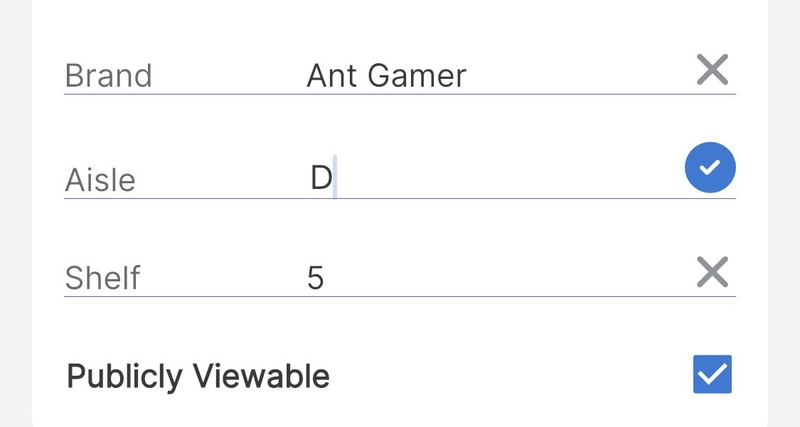
Instead of recording inventory at a general warehouse or site level, you can now assign precise location details, such as Aisle 7, Bay 2, Shelf B, to every item or container. This level of specificity allows teams to move directly to the correct position rather than search through racks or storage zones.
If you want a step-by-step walkthrough of enabling these fields and using them in the app, see our Aisle, Bay, and Shelf launch guide (link to the help article once hosted).
The result is a warehouse location tracking system that works at production speed rather than administrative speed.
The best part?
This feature is so practical for real operations that you do not even need to enter details manually.
Production-line Efficiency with AI Video Recognition
Detailed location tracking only works if it can be created quickly. Traditional methods require staff to add items individually, type names and descriptions, and assign locations one record at a time. In large facilities, this level of effort makes precise organization difficult to maintain.
Scanlily's AI Video Recognition turns cataloging into a continuous workflow.
With Scanlily's video cataloging, you only need to take a photo or video of the items you want to track and the AI will automatically recognize each item from the video and create individual entries - descriptions, images, names, color, etc. - for each item. But it only starts there. Now, you can:
- Mention the Aisle, Bay, and Shelf values while recording
While recording, you can also mention location cues like "Warehouse A, Aisle 7, Bay 2, Shelf B". Scanlily listens and assigns those values to the items captured during that portion of the video. This approach works well in areas without visible labels or where custom naming conventions are used. - Use automatic label detection
If your facility already has aisle markers, bay numbers, or shelf tags, Scanlily's AI can read these identifiers directly from the video. Overhead aisle signs, rack numbers, and shelf labels are recognized and used to populate the location fields.
Both methods allow detailed location tracking to be captured as part of the normal recording process. There is no need to return later and manually edit hundreds of records. The system reflects where items actually belong from the start.
Instead of stopping at each item, a user walks through the storage area while recording a single video. The system identifies individual items within the footage, extracts multiple images, generates descriptions, and creates separate inventory entries automatically.
Because this process happens during one continuous pass, cataloging becomes production-line efficient. A single walk down an aisle can capture dozens of items. Many users are able to document fifty or more items in the time it previously took to enter a few manually.
This approach also improves accuracy. Inventory records are created directly from the physical environment, with images and contextual information captured at the moment items are seen.
From Searching to Direct Retrieval
The operational impact of precise location data is immediate.
Without aisle, bay, and shelf tracking, a typical pick involves traveling to a general area and then searching nearby racks when the item is not immediately visible. Even a short search slows fulfillment when repeated throughout the day.
With detailed location tracking, the process transforms. A picker searches for the item in Scanlily and sees its pinpoint location. They walk directly to that location and retrieve the item without scanning surrounding shelves.
This precision reduces unnecessary movement and eliminates reliance on memory. New staff can work effectively without extensive familiarity with the facility, and experienced staff no longer need to remember rarely ordered items.
Reducing walking and searching also lowers fatigue, which is a major contributor to picking errors during long shifts or high-volume periods.
Finding Items Instantly with Location Filters
Once items are cataloged with location data, Scanlily makes it easy to use that information during daily operations.
Scanlily supports a structured location hierarchy that tracks inventory from the facility level down to the exact storage position. Depending on your setup, this can include Address, Location, Aisle, Bay, Shelf, and Container. Larger operations can use the full structure across multiple sites and storage zones, while smaller teams can work with only the levels they need. Each layer adds clarity and helps ensure items are stored and retrieved from the correct position.
This hierarchy becomes especially useful when searching.
The search feature also includes filters for Location, Aisle, Bay, and Shelf, allowing staff to narrow results step by step. A team member can view everything in a specific warehouse location, then refine the list to a single aisle, then to a bay, and finally drill down to a particular shelf to see exactly what is stored there.
This makes it easy to confirm item placement before walking across the warehouse and supports routine tasks such as cycle counts, replenishment checks, and spot audits. Supervisors can also review all items assigned to a specific area and quickly identify discrepancies between system records and physical storage.
Because location filters work alongside Scanlily's broader search capabilities, users can find inventory based on either item details or storage position. Instead of searching physically and then checking the system, staff can confirm exactly where to go before they move.
Turning Location Data into Operational Insight
It gets even better.
Scanlily is a step ahead of the pack, allowing analysis and sharing of detailed location data.
The Reports feature includes a view that organizes items by Aisle, Bay, and Shelf. These reports display the full location hierarchy along with item images and can be exported as PDF, Excel, or CSV files.
One common use of this is inventory auditing. Before a physical count, managers can generate a report for a specific aisle, so staff know exactly what should be present.
Location reports also support warehouse slotting decisions. By reviewing how inventory is distributed, managers can identify opportunities to move high-demand items to more accessible areas or group frequently picked products together.
Using Location Data to Optimize Layout
Consistent aisle, bay, and shelf tracking provides the visibility needed to improve warehouse layout over time.
Many facilities operate near capacity, where inefficient placement increases congestion and travel distance. Without detailed data, layout changes are often based on assumptions rather than actual picking patterns.
Location reports make it easier to identify fast-moving items and reposition them closer to packing or shipping areas. Grouping related products together reduces travel time for common orders. Even small adjustments can significantly reduce average pick time when applied across daily operations.
Over time, this data-driven approach allows warehouse organizations to evolve alongside demand.
Scanlily's Ask Anything; Find Items in Seconds
Most inventory tools make you search for items like a computer. To find what you're looking for, you must type the exact keyword, match the exact category, and filter the results by the exact field. One typo and you have to start all over.
Scanlily's new Ask Anything feature lets you search your inventory list like a human. Ask 'where's the camera kit we used in San Diego last week?' and the AI understands what you mean, checks your inventory list, and tells you exactly where it is - down to its Aisle, Bay, and Shelf.
And the best part? You can use text or speak to Scanlily and get all the info you want about your items in seconds.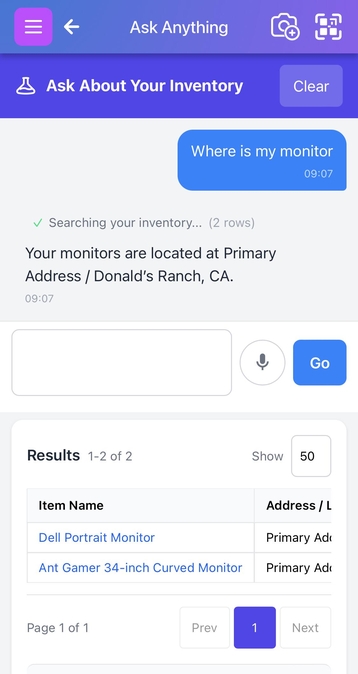
Who Benefits The Most?
Aisle, Bay, and Shelf tracking delivers the most value in operations where speed, accuracy, and consistency depend on knowing exactly where inventory is stored.
Warehouse managers benefit from reduced search time and fewer picking errors, especially in facilities with large stock-keeping unit counts or frequently changing storage layouts. Clear location data helps structure processes so that work does not depend on individual memory or experience.
Distribution centers handling high order volumes see gains in throughput when pickers can move directly to the correct shelf without scanning surrounding racks. Faster retrieval improves order turnaround times and helps maintain accuracy during peak periods.
Third-party logistics (3PL) providers also rely on precise location tracking to manage inventory across multiple clients. Detailed aisle, bay, and shelf records support accurate reporting and clearer accountability when stock moves in and out of shared facilities.
Manufacturing operations also benefit from better visibility across both raw materials and finished goods. Knowing the exact position of components reduces production delays and helps ensure materials are available where and when they are needed.
In each of these environments, the underlying challenge is the same. When inventory locations are unclear or outdated, staff spend time searching instead of working. Precise location tracking replaces uncertainty with system guidance, allowing teams to move faster and operate with greater confidence.
Conclusion
When items are not where they should be, pickers lose time, and orders are delayed.
Scanlily's Aisle, Bay, and Shelf feature makes it possible to capture precise location data without manual entry. By combining AI video cataloging with voice dictation and visual label detection, inventory records reflect the physical environment from the moment they are created.
The result is faster item retrieval, fewer picking errors, and a practical way to maintain accurate organization at scale.
Start with one aisle, record a short walkthrough, and see how many items can be captured with verified aisle, bay, and shelf data in a single pass.